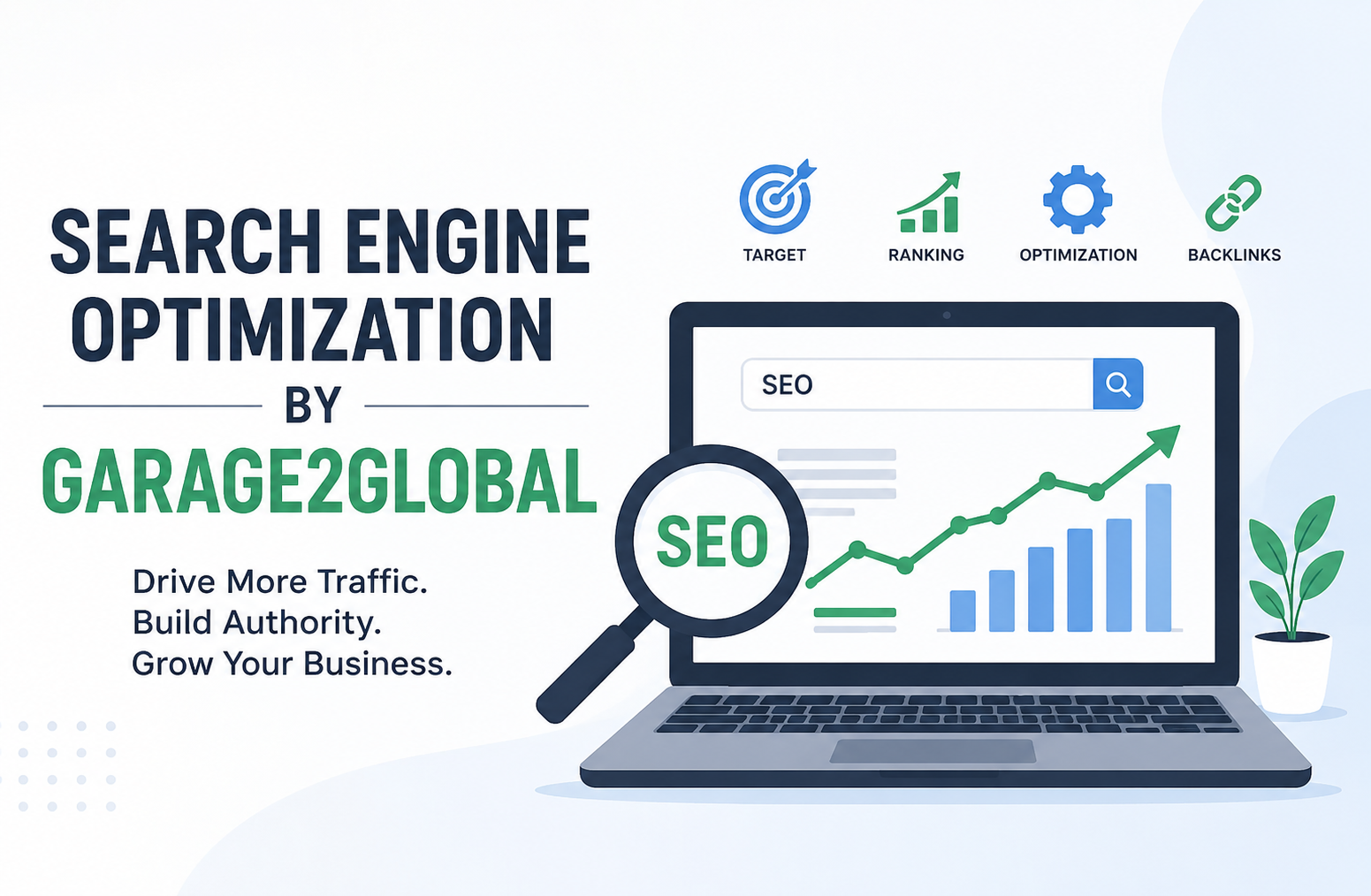
Search Engine Optimization by Garage2Global
Search engine optimization by garage2global has become a topic of growing interest among businesses that want to improve their online visibility without relying entirely on paid advertising. Whether you own a startup, a local business, or an established company, understanding how a structured SEO strategy works can help you attract qualified visitors, increase brand awareness, and generate consistent leads. Instead of focusing only on rankings, a modern SEO approach aims to create valuable content, improve user experience, and build long term authority. This guide explains the concept, its benefits, practical strategies, common challenges, and real world applications so you can make informed decisions for your business.
Understanding Search Engine Optimization
Search engine optimization, commonly known as SEO, is the process of improving a website so it appears more prominently in search engine results when people search for relevant topics, products, or services. Good SEO is not about manipulating search engines. It is about creating a website that deserves visibility because it provides useful information, loads quickly, offers a great user experience, and answers the questions people are searching for.
Modern SEO combines technical improvements, high quality content, keyword research, user experience optimization, and authority building. Businesses that invest in SEO often experience sustainable growth because organic traffic continues long after content is published.
What Is Search Engine Optimization by Garage2Global?
Search engine optimization by garage2global refers to the SEO services and optimization strategies associated with Garage2Global. The approach focuses on helping businesses strengthen their online presence through well planned optimization rather than relying on shortcuts or outdated ranking tactics.
Although every SEO provider has its own workflow, successful optimization generally includes several important elements:
- Comprehensive website analysis
- Keyword research based on search intent
- Technical SEO improvements
- High quality content creation
- On page optimization
- Off page authority building
- Performance monitoring
- Continuous strategy refinement
The ultimate goal is to help businesses connect with their ideal audience while following search engine best practices.
Why SEO Matters More Than Ever
The internet has become increasingly competitive. Millions of websites compete for attention every day. Without proper optimization, even valuable products and services may remain invisible to potential customers.
SEO provides several long term advantages.
Increased Organic Visibility
Appearing on the first page of search results significantly increases the likelihood of attracting visitors. Most users rarely explore beyond the first page.
Better Quality Traffic
SEO targets people who are actively searching for information or solutions. This often results in visitors with stronger purchase intent compared to many advertising methods.
Long Term Growth
Unlike paid campaigns that stop producing traffic once the budget ends, optimized content can continue attracting visitors for months or even years.
Improved User Experience
Many SEO improvements also benefit website visitors. Faster loading pages, better navigation, mobile friendly design, and organized content all contribute to a better browsing experience.
Higher Brand Credibility
People generally trust websites that consistently appear in search results. Strong visibility often strengthens brand recognition and customer confidence.
Core Components of an Effective SEO Strategy
Successful SEO involves multiple interconnected areas rather than a single activity.
Keyword Research
Keyword research identifies the words and phrases potential customers use while searching online.
Good keyword research considers:
- Search intent
- Competition level
- Search volume
- User needs
- Related search phrases
Rather than chasing only high volume keywords, experienced SEO professionals often target highly relevant search terms that match business goals.
Content Optimization
Content remains one of the strongest ranking factors because search engines prioritize helpful information.
Effective content should:
- Answer user questions clearly
- Cover topics comprehensively
- Remain easy to read
- Include supporting examples
- Stay updated as information changes
Instead of writing solely for algorithms, content should satisfy real readers.
Technical SEO
Technical SEO ensures search engines can crawl and understand a website efficiently.
Important technical areas include:
- Website speed
- Mobile responsiveness
- Secure HTTPS connection
- XML sitemap
- Structured navigation
- Proper indexing
- Clean URL structure
Even excellent content may struggle if technical issues prevent search engines from accessing it properly.
On Page SEO
On page optimization improves individual pages by refining various elements.
Examples include:
- Page titles
- Meta descriptions
- Heading structure
- Image optimization
- Internal organization
- Readable formatting
- Relevant keywords used naturally
Every page should focus on solving one primary user problem.
Off Page SEO
Off page SEO focuses on building website authority outside the website itself.
Common activities include:
- Earning quality backlinks
- Building brand mentions
- Creating shareable content
- Digital public relations
- Industry partnerships
Search engines often interpret trusted references as signals of credibility.
How Businesses Benefit from Professional SEO
Professional optimization goes beyond increasing rankings. It supports broader business objectives.
Stronger Online Presence
A visible website reaches more potential customers throughout the buying journey.
Better Lead Generation
Organic visitors often convert well because they already have interest in the topic.
Competitive Advantage
Businesses that consistently invest in SEO often outperform competitors who rely only on advertising.
Improved Marketing Efficiency
SEO complements content marketing, email campaigns, and social media efforts by attracting qualified visitors.
Measurable Performance
Modern analytics allow businesses to measure:
- Organic traffic
- Conversion rates
- User engagement
- Keyword performance
- Bounce rate
- Customer acquisition trends
These insights support better business decisions.
Common SEO Challenges
SEO delivers valuable results, but it also presents several challenges.
Changing Search Algorithms
Search engines regularly update ranking systems to improve search quality. Businesses should avoid chasing algorithm loopholes and instead focus on creating genuinely useful content.
High Competition
Popular industries often have thousands of competing websites targeting similar audiences.
Success requires patience, consistent improvement, and strategic planning.
Content Quality Expectations
Search engines increasingly reward content demonstrating expertise, originality, and genuine value.
Thin pages with little useful information rarely perform well over time.
Technical Complexity
Large websites often face technical issues involving indexing, duplicate content, page speed, or site architecture.
Regular technical audits help identify and resolve these problems before they impact performance.
Practical SEO Strategies That Produce Results
Businesses frequently ask which activities create the biggest improvements.
In practice, sustainable success usually comes from combining several proven strategies.
Focus on User Intent
Understand why someone searches for a particular phrase.
Some users want information.
Others compare products.
Some are ready to make a purchase.
Creating content that matches intent increases satisfaction and engagement.
Publish Helpful Content Consistently
Consistency often matters more than volume.
A smaller number of detailed, accurate articles usually outperforms hundreds of low quality pages.
Improve Website Speed
Visitors expect pages to load quickly.
Even small speed improvements can reduce abandonment and improve user satisfaction.
Optimize for Mobile Users
Most searches now occur on mobile devices.
Responsive design improves accessibility across different screen sizes.
Update Existing Content
Refreshing older articles often produces better results than constantly publishing new ones.
Updating statistics, adding examples, improving readability, and expanding sections keeps content relevant.
Real World Applications Across Industries
SEO benefits organizations across nearly every sector.
Local Businesses
Restaurants, clinics, repair services, and retail stores can attract nearby customers searching for local solutions.
Ecommerce Stores
Online retailers improve product visibility by optimizing category pages, product descriptions, and buying guides.
Professional Services
Consultants, accountants, lawyers, and agencies use SEO to demonstrate expertise and generate qualified inquiries.
Educational Organizations
Schools and training providers create educational resources that answer common student questions.
Healthcare Providers
Healthcare organizations publish trustworthy educational information that helps patients understand conditions and treatment options.
Software Companies
Technology companies attract users through tutorials, comparison articles, documentation, and problem solving guides.
Advanced SEO Strategies That Deliver Sustainable Results
Businesses that achieve long term success rarely depend on a single optimization technique. Instead, they combine technical improvements, useful content, audience research, and continuous analysis. This balanced approach helps websites remain competitive even as search engines evolve.
One important principle is consistency. Publishing one excellent article every month is often more valuable than publishing several low quality articles every week. Consistency builds authority, encourages search engines to revisit your website, and gives users confidence in your expertise.
Search Engine Optimization by Garage2Global for Business Growth
Search engine optimization by garage2global is often discussed in the context of helping businesses create a structured digital growth strategy. Rather than viewing SEO as a one time project, successful businesses treat it as an ongoing process that supports marketing, sales, customer education, and brand development.
A practical SEO strategy usually begins with understanding the business itself.
Questions worth asking include:
- Who is the ideal customer?
- What problems are customers trying to solve?
- Which search queries reflect those problems?
- Which competitors currently rank well?
- What type of content performs best within the industry?
Answering these questions creates a strong foundation before technical work even begins.
Building Content That People Actually Want to Read
Many websites fail because they write for search engines instead of readers.
Helpful content should answer real questions in a logical order. Readers should never feel that paragraphs exist only to repeat keywords.
High quality content usually has several characteristics.
It Solves a Specific Problem
Every page should have one primary objective. Trying to answer too many unrelated questions often confuses readers.
It Uses Clear Language
Complicated vocabulary does not automatically create authority.
Simple explanations allow more people to understand the topic while improving readability.
It Includes Practical Examples
Real examples make information easier to understand.
Instead of saying that page speed matters, explain how reducing image sizes, minimizing unnecessary scripts, and enabling browser caching can improve loading times.
It Stays Updated
SEO changes continuously.
Refreshing existing content keeps information accurate and useful for visitors.
Understanding Search Intent
Search intent remains one of the strongest influences on rankings.
People search for different reasons.
Informational Intent
Users want to learn something.
Examples include:
- What is SEO?
- How does technical optimization work?
- Why are backlinks important?
These searches require educational content.
Navigational Intent
Users already know which website they want to visit.
Examples include searching directly for a company or product name.
Commercial Investigation
Users compare different solutions before making a decision.
Content such as detailed comparisons, buying guides, and reviews performs well for this audience.
Transactional Intent
These users are ready to take action.
Clear service pages, product pages, and contact information become especially important.
Matching content to intent improves satisfaction and increases conversion opportunities.
The Importance of Technical Excellence
Content alone cannot overcome serious technical problems.
Several technical factors deserve ongoing attention.
Website Speed
Slow websites frustrate visitors.
Improving loading performance often reduces bounce rates while increasing engagement.
Mobile Compatibility
A responsive website adapts smoothly across phones, tablets, and desktop computers.
Since many users browse on mobile devices, responsive design is no longer optional.
Secure Browsing
HTTPS encryption protects user information and improves trust.
Visitors expect secure browsing, especially when submitting personal information.
Crawlability
Search engines must discover pages efficiently.
Broken links, blocked resources, and incorrect indexing instructions can reduce visibility.
Structured Site Architecture
Logical navigation benefits both visitors and search engines.
Every important page should be accessible through a clear hierarchy.
Measuring SEO Success
Many businesses judge SEO only by keyword rankings.
While rankings matter, they represent only one part of overall performance.
More meaningful indicators include:
- Organic traffic growth
- Qualified leads
- Conversion rate
- Average engagement time
- Returning visitors
- Pages viewed per session
- Revenue generated through organic search
These measurements provide a more complete understanding of business impact.
Common Mistakes That Limit SEO Performance
Even experienced businesses occasionally make avoidable mistakes.
Publishing Thin Content
Very short articles that provide little value rarely perform well.
Readers expect detailed answers supported by clear explanations.
Ignoring User Experience
Excellent information loses value if visitors struggle to navigate the website.
Confusing menus, intrusive popups, and cluttered layouts reduce satisfaction.
Keyword Overuse
Repeating keywords excessively creates poor readability.
Modern search engines understand context and related language, making natural writing far more effective.
Neglecting Existing Content
Many organizations publish new content while ignoring older articles.
Refreshing outdated pages often produces faster improvements than starting from scratch.
Chasing Shortcuts
Promises of instant rankings usually rely on risky tactics.
Sustainable SEO requires patience, quality, and continuous improvement.
How Artificial Intelligence Is Changing SEO
Artificial intelligence has become part of modern search technology.
Search engines increasingly evaluate:
- Content quality
- Context
- User satisfaction
- Expertise
- Originality
This means businesses should focus less on manipulating algorithms and more on helping readers.
AI tools can assist with research, organization, and editing, but human expertise remains essential for creating trustworthy content.
Content Planning for Long Term Growth
Successful websites rarely publish random articles.
Instead, they develop content around related topics.
For example, an SEO focused website might create resources covering:
- Keyword research
- Technical optimization
- Local visibility
- Content strategy
- Website audits
- Analytics
- Link building
- User experience
This organized structure strengthens topical authority over time.
The Role of User Experience in Modern SEO
User experience influences how visitors interact with a website.
Positive experiences encourage people to stay longer, explore additional pages, and return later.
Important user experience factors include:
- Fast loading pages
- Easy navigation
- Readable fonts
- Clear headings
- Helpful images
- Mobile friendly layouts
- Accessible design
Improving these areas benefits both visitors and search visibility.
Creating Trust Through Expertise
People trust websites that demonstrate genuine knowledge.
Businesses can strengthen credibility by:
- Publishing accurate information
- Updating outdated content
- Explaining complex topics clearly
- Citing reliable research during content creation
- Showing practical experience
- Maintaining transparency
Trust develops gradually through consistent quality rather than promotional claims.
A Practical SEO Implementation Roadmap
Businesses beginning their optimization journey often benefit from following a structured plan.
Step 1
Evaluate the current website.
Identify technical problems, weak content, and opportunities for improvement.
Step 2
Research your audience.
Understand customer questions, challenges, and search behavior.
Step 3
Develop a keyword strategy.
Focus on topics that genuinely match business goals.
Step 4
Improve technical performance.
Resolve indexing issues, improve loading speed, and optimize mobile usability.
Step 5
Create valuable content.
Prioritize quality over quantity.
Step 6
Monitor performance.
Review analytics regularly and adjust strategies based on real data.
Step 7
Continue improving.
SEO is an ongoing investment rather than a one time task.
What Businesses Should Expect From Professional SEO
Businesses often expect immediate rankings.
In reality, sustainable optimization usually requires several months before meaningful improvements become visible.
Factors affecting results include:
- Industry competition
- Website history
- Technical condition
- Content quality
- Domain authority
- Available resources
- Consistency of implementation
Patience combined with continuous improvement generally produces the strongest long term outcomes.
Looking Ahead
Search continues evolving toward understanding people rather than simply matching keywords.
Future SEO success will likely depend even more on:
- Helpful content
- Demonstrated expertise
- User satisfaction
- Website performance
- Accessibility
- Trustworthiness
- Original research
- Clear communication
Businesses that prioritize genuine value instead of algorithm manipulation are better positioned for long term success.
Frequently Asked Questions
What is search engine optimization by garage2global?
Search engine optimization by garage2global refers to SEO services and strategies designed to improve a website’s visibility in search engines through technical optimization, content improvement, keyword research, and long term organic growth practices.
How long does SEO take to show results?
SEO is a long term investment. Many websites begin seeing measurable improvements within three to six months, while highly competitive industries may require more time depending on competition, website quality, and consistency.
Is SEO better than paid advertising?
SEO and paid advertising serve different purposes. Paid campaigns can generate immediate traffic, while SEO focuses on building sustainable organic visibility that can continue attracting visitors over the long term.
Can small businesses benefit from SEO?
Yes. Small businesses often gain significant value from SEO because it helps them reach customers searching for their products or services without relying entirely on advertising budgets.
Why is content important for SEO?
Content helps search engines understand your website while providing valuable information to users. High quality, accurate, and well organized content increases the chances of earning better visibility and stronger user engagement.
Conclusion
Search engine optimization continues to be one of the most effective digital marketing strategies for businesses that want sustainable online growth. Rather than chasing short term ranking gains, successful SEO focuses on creating valuable content, improving website performance, understanding user intent, and building long term trust. Businesses that consistently invest in these areas are better positioned to attract qualified visitors, strengthen brand credibility, and remain competitive as search engines continue to evolve.
Understanding the principles behind search engine optimization by garage2global allows businesses to evaluate SEO strategies more effectively and make informed decisions based on quality, transparency, and long term value instead of quick fixes. Whether the goal is increasing visibility, generating leads, or improving customer engagement, a people first approach remains the strongest foundation for lasting success.