CDiPhone: Truth Behind the Concept Explained
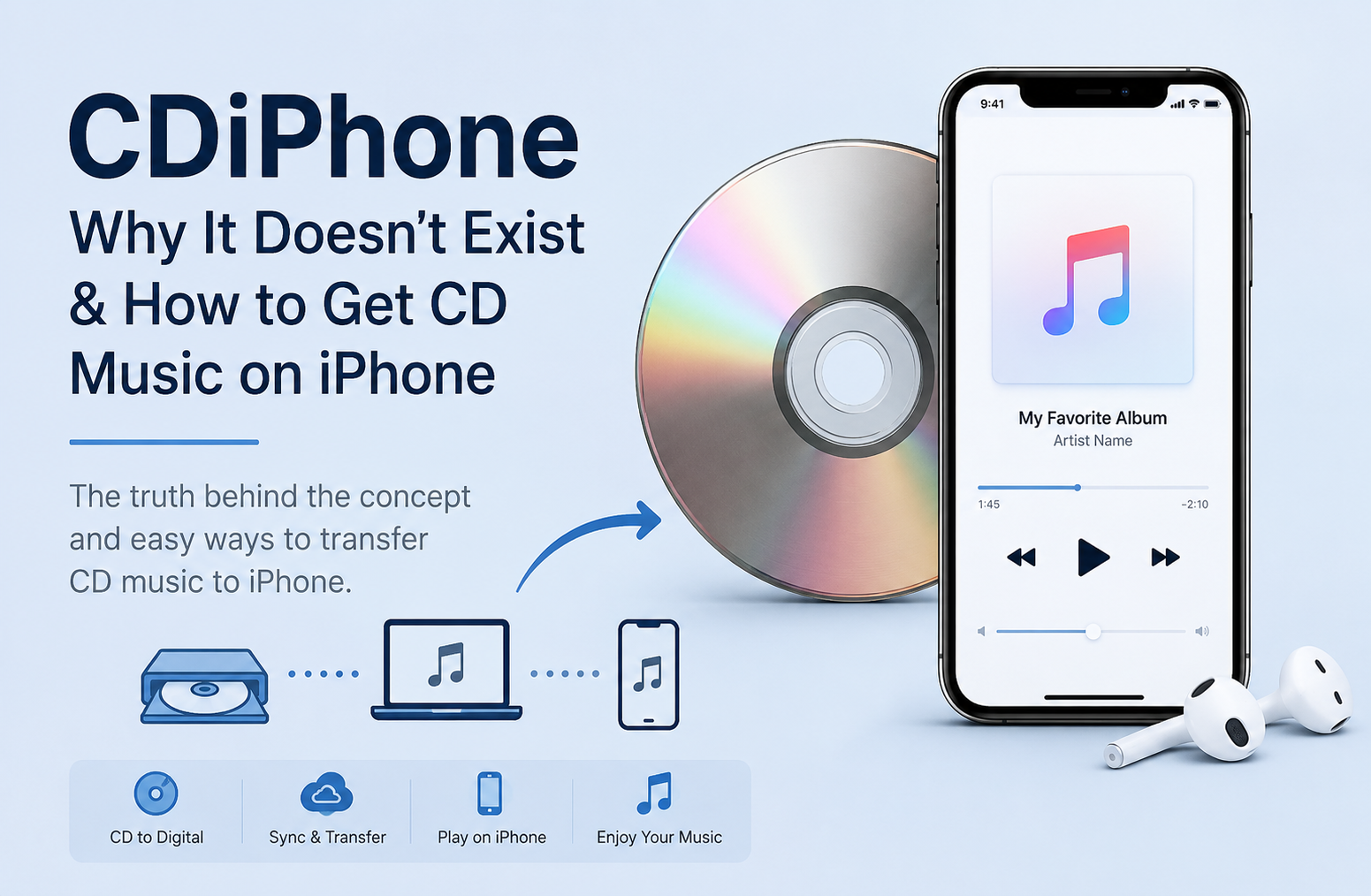
The idea of a cdiphone has captured curiosity among music lovers who still value physical media. Many people wonder whether a smartphone could ever support compact discs directly, or if such a device already exists. In reality, the cdiphone is not a real product but rather a concept that reflects the intersection of nostalgia for CDs and the convenience of modern smartphones.
This article explores the truth behind the cdiphone idea, why it does not exist, and how you can still enjoy your CD music on an iPhone using practical, proven methods.
What Is a CDiPhone?
A cdiphone is a hypothetical concept describing a smartphone, specifically an iPhone, that could play CDs directly. It suggests a built-in CD drive or seamless integration with physical discs.
However, based on real-world data:
- It is not an official Apple product
- It has never been released
- It exists only as a user-driven idea or misconception
The concept emerges from a simple question:
Can older music formats coexist with modern mobile technology?
The Rise and Fall of CDs
To understand the cdiphone concept, we need to look at the history of CDs.
Origins of Compact Discs
- Introduced by Philips in 1982
- Became the dominant music format through the 1980s and 1990s
- Known for:
- High audio quality
- Durability compared to tapes
- Physical ownership of music
Why CDs Declined
Several factors led to their decline:
- Growth of the internet
- Rise of MP3 files
- Digital downloads
- Streaming platforms
These changes shifted user behavior from physical to digital consumption.
The Unexpected Comeback
Interestingly, CDs are seeing a revival:
- Industry growth increased by 11% in 2023
- Market value reached $537 million
- حوالي 43% of buyers are under 35
Why CDs Are Returning
- Nostalgia factor
- Better perceived sound quality
- Tangible ownership
- Support for artists
- Affordable pricing
This resurgence is one reason the cdiphone idea keeps resurfacing.
Evolution of the iPhone
The iPhone has followed a completely different path.
Key Milestones
- First launched on 9 January 2007
- Continuous improvements in:
- Processing power
- Camera technology
- Storage capacity
- Software ecosystem
Design Philosophy
Apple has always focused on:
- Minimalism
- Portability
- Efficiency
- Wireless functionality
This design direction directly conflicts with the idea of integrating CD hardware.
Why a CDiPhone Does Not Exist
Despite the interest, there are clear technical and strategic reasons why a cdiphone has never been created.
1. Size Constraints
A CD requires a spinning disc mechanism:
- Too large for slim smartphone designs
- Would significantly increase device thickness
2. Power Consumption
CD drives need mechanical movement:
- Higher battery usage
- Reduced efficiency compared to digital playback
3. Outdated Technology
CDs are considered legacy technology:
- Replaced by streaming and cloud storage
- Limited demand compared to digital formats
4. Software Limitations
Modern operating systems:
- Are not designed to manage physical disc input
- Focus on streaming, downloads, and cloud syncing
5. Apple’s Strategic Direction
Apple has moved away from CDs entirely:
- External SuperDrive CD readers were discontinued in 2024
- Emphasis is now on wireless and digital ecosystems
Can You Play CDs on an iPhone?
The simple answer:
No, you cannot directly play CDs on an iPhone.
However, you can still access your CD music through indirect methods.
How to Get CD Music on iPhone
Even though a cdiphone does not exist, there are reliable ways to transfer CD music to your device.
Method 1: Using a Computer with CD Drive
This is the most common and effective approach.
Steps:
- Insert CD into your computer
- Open Music app or iTunes
- Import tracks into your library
- Connect your iPhone
- Sync music to your device
Why It Works
- Converts CD audio into digital files
- Compatible with iPhone playback systems
Method 2: Sync via Apple Music or iCloud
Once music is imported:
- Upload songs to your cloud library
- Access them on your iPhone without cables
Benefits
- Wireless access
- Backup storage
- Multi-device syncing
Method 3: Convert to MP3 and Transfer
You can manually convert CD tracks:
Process:
- Rip CD into MP3 format
- Save files on your computer
- Transfer via USB or file-sharing tools
Advantages
- Universal format
- Easy compatibility
Method 4: Use Third-Party Apps
Apps like iMazing offer alternative transfer solutions.
Features:
- Direct file management
- No reliance on iTunes
- Faster syncing options
Real-World Limitations
Even with these methods, some limitations remain:
- No real-time CD playback
- Requires initial conversion
- Dependent on external hardware
- Extra steps compared to streaming
These limitations highlight why the cdiphone idea remains impractical.
Why People Still Want a CDiPhone
Despite technological barriers, interest in cdiphone continues due to emotional and practical reasons.
Emotional Connection
- Physical albums feel more personal
- Artwork and packaging enhance experience
Ownership vs Streaming
- CDs provide permanent ownership
- Streaming relies on subscriptions
Audio Quality Debate
Some users believe:
- CDs offer richer sound than compressed digital formats
Collector Culture
- Limited editions
- Signed albums
- Special releases
Future Possibilities
While a true cdiphone is unlikely, some innovations could bridge the gap.
Potential Developments
- Wireless CD players connected to smartphones
- Smart apps for enhanced CD digitization
- Mini external drives with improved portability
- Digital album apps replicating physical experiences
These solutions may satisfy users without changing smartphone design.
Expert Insight: Bridging Analog and Digital
From a practical perspective, the cdiphone represents a deeper shift in user expectations.
People are not just asking for a device. They are asking for:
- Better control over their media
- A blend of nostalgia and convenience
- Ownership in a streaming-dominated world
In my observation, users who still rely on CDs often value intentional listening. Unlike streaming, where music is disposable, CDs encourage a more focused experience.
This explains why the idea persists, even if the product itself does not.
Common Misconceptions About CDiPhone
Myth 1: Apple Is Working on It
There is no verified evidence that Apple is developing such a device.
Myth 2: Adapters Can Enable CD Playback
Adapters cannot create hardware functionality that does not exist.
Myth 3: Old iPhones Supported CDs
No iPhone model has ever included a CD drive.
Practical Advice for CD Users
If you still own CDs, here is the best approach:
- Digitize your entire collection
- Store files in high-quality formats
- Use cloud backup
- Organize your library properly
This ensures long-term accessibility without relying on outdated hardware.
FAQs
1. What is a cdiphone?
A cdiphone is a conceptual idea of an iPhone that can play CDs directly. It is not a real product.
2. Can I connect a CD player to my iPhone?
Not directly. You must first convert CD audio into digital files before accessing it on your iPhone.
3. Why don’t modern phones support CDs?
Due to size limitations, power requirements, and the shift toward digital media formats.
4. Is CD quality better than streaming?
In some cases, CDs provide higher-quality audio, but high-resolution streaming services can offer comparable quality.
5. What is the easiest way to transfer CD music?
Using a computer with a CD drive and syncing through iTunes or the Music app is the simplest method.
6. Will Apple ever release a cdiphone?
It is highly unlikely based on current design trends and technological priorities.
Conclusion
The cdiphone is not a real device, but it reflects a genuine desire to merge physical and digital music experiences. While smartphones cannot play CDs directly, there are effective ways to bring your CD collection into the modern world through digitization and syncing.
Understanding the limitations and available solutions allows you to enjoy the best of both formats without waiting for a product that may never exist.