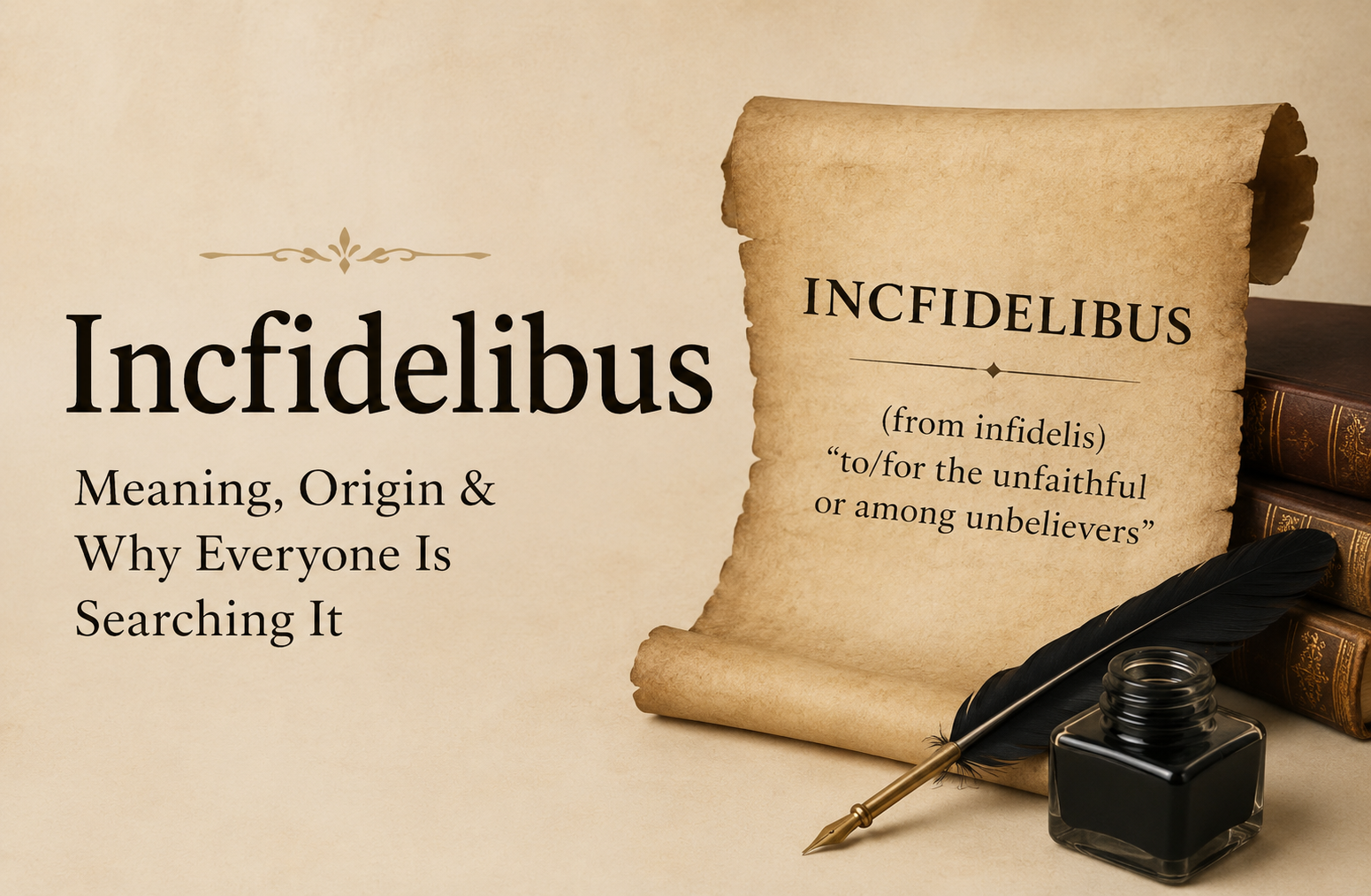
Why Is Everyone Searching Incfidelibus
The term incfidelibus has recently sparked curiosity across search engines, academic circles, and creative communities. At first glance, it appears to be a Latin word with deep philosophical roots, yet a closer examination reveals a more complex and intriguing story. The rise in interest around incfidelibus is not accidental. It reflects how language evolves, how errors become identities, and how digital discovery reshapes meaning. In this article, we will explore what incfidelibus truly is, why people are searching for it, and how it fits into both historical and modern contexts.
What Is Incfidelibus
At its core, incfidelibus is not a valid classical Latin word. Instead, it is a distorted or typographical variant of the Latin term infidelibus. The original Latin word comes from infidelis, which translates to unfaithful or unbelieving.
Linguistic Breakdown
- Prefix: “in” meaning not
- Root: “fidelis” meaning faithful or loyal
- Combined Meaning: unfaithful or unbelieving
- Form: Dative or ablative plural in Latin grammar
The intended meaning of the original term infidelibus is typically translated as “to the unfaithful” or “among the unbelievers.”
However, incfidelibus emerged due to errors rather than intentional linguistic evolution.
The Origin of the Error
The existence of incfidelibus can be traced back to technical and human limitations in text reproduction.
Common Causes
- OCR Errors
Optical Character Recognition systems often misread historical texts. In many cases, the long “f” used in old manuscripts resembles “cf,” leading to incorrect transcription. - Manuscript Copying Mistakes
Before printing technology became standardized, scribes manually copied texts. Even minor misinterpretations could lead to lasting variations. - Typographical Distortions
Early printing presses and later digital conversions sometimes introduced small but impactful errors.
These mechanisms collectively contributed to the accidental creation of incfidelibus.
Why Is Incfidelibus Trending Today
The surge in searches for incfidelibus reflects a broader trend in digital curiosity and linguistic exploration.
Key Reasons Behind Its Popularity
- Mystery Factor
The unfamiliar structure of the word makes it intriguing. People naturally search for terms that feel obscure yet meaningful. - Misinterpretation
Many users assume it is a legitimate Latin phrase, leading to increased searches. - Creative Appeal
Writers, designers, and brand creators are drawn to unique terms that carry a sense of depth and ambiguity. - Algorithmic Amplification
Search engines sometimes amplify rare terms due to repeated queries, further fueling interest.
Historical Context and Usage
Although incfidelibus itself is not historically valid, its root word has significant historical relevance.
Where the Original Term Appeared
- Ecclesiastical texts discussing faith and belief systems
- Medieval treaties describing relations between different religious groups
- Legal documents outlining societal boundaries
These contexts highlight how the original concept was used to distinguish between belief systems and cultural identities.
Philosophical Meaning Behind the Concept
Even though incfidelibus is technically incorrect, it still carries philosophical weight due to its association with infidelibus.
Themes It Represents
- Faith versus skepticism
- Inclusion versus exclusion
- Identity and belief systems
In many ways, the term symbolizes the tension between belonging and otherness. This is one reason it continues to resonate with modern audiences.
Modern Applications of Incfidelibus
Interestingly, the value of incfidelibus today lies not in its accuracy but in its adaptability.
Where It Is Used Today
1. Creative Writing
Authors use the term to evoke mystery, ancient knowledge, or philosophical depth.
2. Branding and Naming
Startups and creative projects often look for unique names. Incfidelibus offers:
- Distinctiveness
- Memorability
- Intellectual tone
3. Symbolic Expression
Artists and thinkers use it to represent ambiguity and reinterpretation of meaning.
Advantages of Using Incfidelibus
Despite its origins as an error, the term has gained practical value in certain contexts.
Key Benefits
- Unique Identity
It stands out in a crowded digital landscape. - Emotional Depth
The word carries a sense of history and philosophical intrigue. - Searchability
Its rarity makes it easier to rank for in niche content. - Creative Freedom
Since it is not bound by strict definitions, it allows flexible interpretation.
Limitations and Risks
While incfidelibus offers creative advantages, it also comes with notable drawbacks.
Important Considerations
- Lack of Academic Credibility
Scholars do not recognize it as a valid term. - Potential Misinterpretation
Readers may assume it is a misspelling or error. - Context Sensitivity
Using it in formal or academic writing can reduce credibility. - Ambiguity
Its unclear meaning may confuse audiences.
Expert Insight and Real World Perspective
From my experience analyzing language trends and digital content behavior, terms like incfidelibus often follow a predictable pattern.
First, an error occurs.
Second, the error spreads through repetition.
Third, the term gains independent meaning.
This process is not new. Language has always evolved through misuse, reinterpretation, and cultural adaptation. What makes incfidelibus unique is how quickly digital platforms accelerate this transformation.
When Should You Use Incfidelibus
Understanding when to use the term is essential for maintaining credibility.
Recommended Scenarios
- Creative projects such as novels or poetry
- Brand naming where uniqueness is prioritized
- Symbolic or philosophical discussions
Situations to Avoid
- Academic research papers
- Formal legal documents
- Historical analysis requiring accuracy
How to Use It Effectively
If you decide to use incfidelibus, clarity is key.
Practical Tips
- Provide Context
Explain its origin to avoid confusion. - Use It Sparingly
Overuse can reduce its impact. - Align With Purpose
Ensure it fits the tone and message of your content. - Combine With Clear Language
Balance complexity with readability.
The Cultural Impact of Linguistic Errors
The story of incfidelibus highlights a broader cultural phenomenon.
Key Observations
- Errors can become identities
- Digital platforms accelerate linguistic change
- Meaning is shaped by usage, not just origin
This challenges traditional views of language as fixed and instead presents it as dynamic and evolving.
FAQs
Is incfidelibus a real Latin word
No, it is not recognized as a valid Latin word. It is a distorted version of infidelibus.
What does incfidelibus mean
It indirectly relates to the meaning of infidelibus, which translates to “to the unfaithful” or “among unbelievers.”
Why do people search for incfidelibus
People are drawn to its mysterious appearance, perceived historical depth, and unique structure.
Can incfidelibus be used in academic writing
It is not recommended because it lacks linguistic validity and scholarly recognition.
Where is incfidelibus commonly used today
It appears in creative writing, branding, and symbolic contexts rather than formal settings.
Conclusion
The growing interest in incfidelibus reveals more than just curiosity about a word. It reflects how language evolves in the digital age, how errors can transform into meaningful symbols, and how people are drawn to mystery and uniqueness. While it may not hold academic legitimacy, its cultural and creative value is undeniable. Understanding its origins, applications, and limitations allows you to use it thoughtfully and effectively.