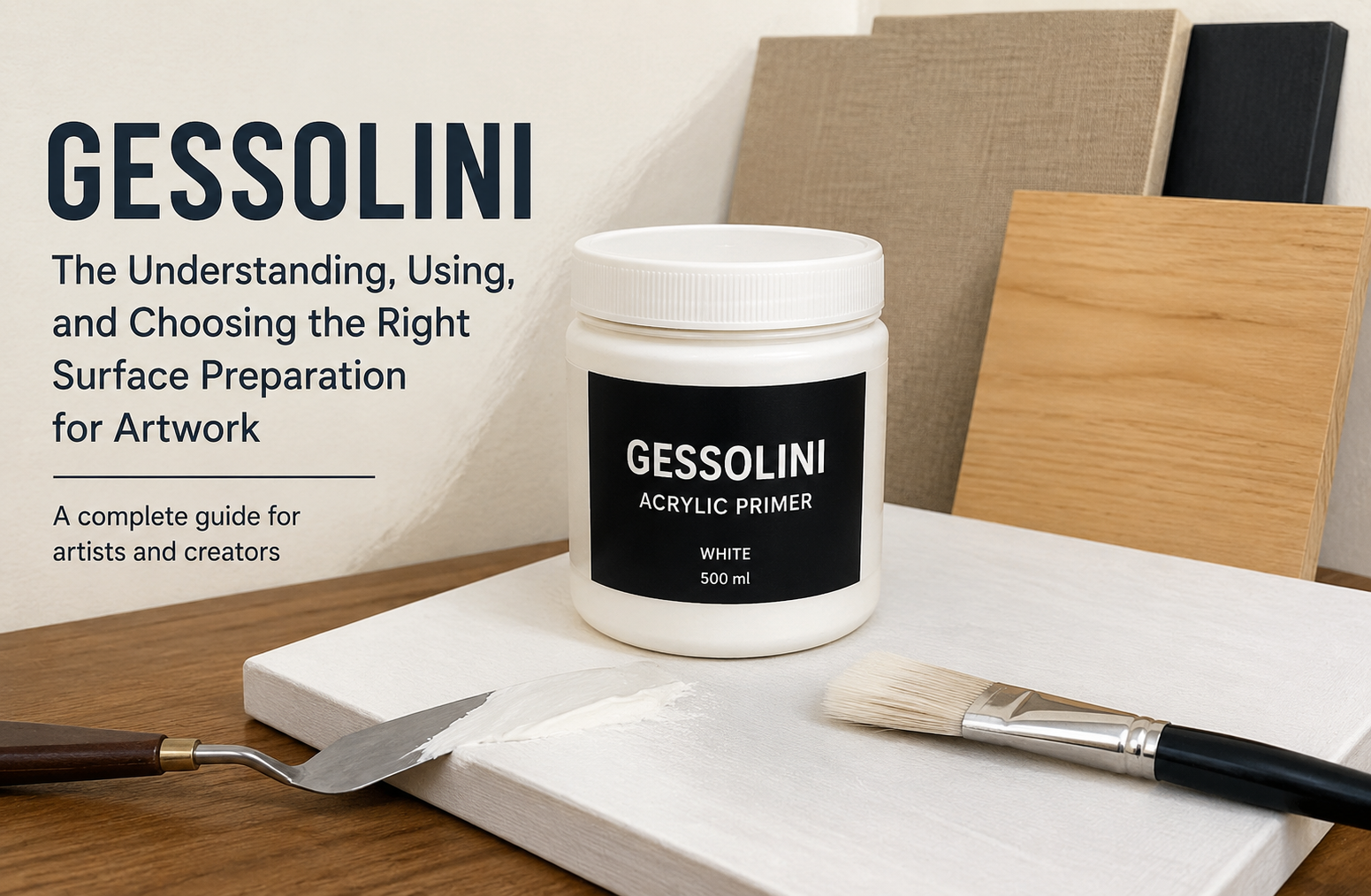
Gessolini: A Complete Guide to Surface Preparation
Painting begins long before the first brushstroke touches a surface. Gessolini plays an important role in creating a strong foundation for artwork by preparing painting surfaces for better adhesion, durability, and overall quality. Whether you are a beginner experimenting with acrylics or a professional artist creating gallery-quality paintings, understanding how this specialized primer works can significantly improve your results. A properly prepared surface helps paint spread evenly, reduces unnecessary paint absorption, preserves vibrant colors, and supports artwork that lasts for many years.
Many artists focus heavily on brushes, paints, and techniques while overlooking the importance of surface preparation. In reality, even premium paints cannot perform at their best if they are applied to an unsuitable surface. A quality primer creates the ideal foundation that allows every layer of paint to perform as intended.
This guide explores everything you need to know about this painting primer, including its purpose, ingredients, types, applications, benefits, common mistakes, and professional techniques. Whether your goal is creating fine art, mixed-media projects, decorative crafts, or classroom artwork, understanding proper surface preparation can make a noticeable difference.
What Is gessolini?
Gessolini is a specialized surface preparation primer designed to seal porous materials before painting. It creates a slightly textured foundation that improves paint adhesion while protecting the underlying surface from excessive moisture absorption.
Unlike an untreated canvas or wooden panel, a primed surface provides consistent paint behavior across the entire artwork. Instead of soaking unevenly into fibers or wood grain, paint remains on the prepared surface where it can blend smoothly and maintain stronger color intensity.
Modern products are generally acrylic based and water based, making them easier to apply, faster drying, and more flexible than traditional gesso formulations used centuries ago.
Artists commonly use it on:
- Cotton canvas
- Linen canvas
- Wooden panels
- MDF boards
- Hardboard
- Illustration boards
- Paper
- Cardboard
- Mixed-media panels
- Decorative craft surfaces
The result is a durable painting surface that supports both beginners and experienced professionals.
Why Surface Preparation Matters
Many painting problems begin before painting even starts.
Without proper preparation, surfaces may absorb paint unevenly, causing inconsistent colors, weak adhesion, and reduced durability. Over time, these issues may contribute to cracking, peeling, or fading.
Proper preparation offers several practical advantages.
Better Paint Adhesion
One of the biggest advantages is stronger paint grip.
Instead of sitting loosely on raw material, paint bonds more effectively to the prepared surface. This creates a stable painting layer that is less likely to peel or chip.
Longer Artwork Life
A properly sealed surface helps protect the artwork from environmental changes such as humidity and moisture.
This additional protection supports the longevity of paintings by reducing stress on canvas fibers or wooden panels.
Improved Color Brightness
Raw materials often absorb part of the paint, making colors appear dull.
A prepared surface keeps pigments closer to the top layer, allowing colors to appear brighter and more vibrant.
Easier Layering
Artists frequently build paintings through multiple layers.
A smooth, prepared foundation allows each layer to sit consistently on previous layers, making glazing, blending, and detailing much easier.
Reduced Paint Waste
When paint no longer disappears into porous materials, artists often require fewer coats to achieve the desired opacity.
This saves both time and painting materials.
The History Behind Modern Surface Primers
The concept of preparing painting surfaces is not new.
During the Renaissance, artists commonly used traditional gesso made from animal glue, chalk, and white pigment. This mixture created a hard, smooth painting surface suitable for wooden panels.
Although effective for its time, traditional gesso had several limitations.
It was relatively brittle, required careful preparation, and could crack when applied to flexible surfaces such as stretched canvas.
Modern acrylic based primers evolved to solve these issues.
Today’s formulations offer:
- Faster drying
- Better flexibility
- Improved crack resistance
- Easier application
- Water based cleanup
- Greater compatibility with multiple painting techniques
This evolution has made professional surface preparation more accessible for artists of every skill level.
Common Ingredients and Their Purpose
Although formulations vary between manufacturers, most modern products contain similar components that work together to create an effective painting surface.
Acrylic Polymer
Acrylic polymer acts as the primary binder.
It holds all ingredients together while creating a flexible coating that resists cracking.
White Pigments
White pigments create the bright appearance associated with standard primers.
They also improve light reflection beneath paint layers.
Calcium Carbonate
Calcium carbonate contributes to the slightly textured finish that helps paint grip the surface.
This microscopic texture is one reason artists experience smoother brush control.
Fillers
Fillers help level minor surface imperfections while improving consistency during application.
Titanium Dioxide
Titanium dioxide increases opacity and brightness, creating a clean base for painting.
Water Based Additives
Water based additives improve application characteristics, drying behavior, and overall product stability.
Preservatives
Preservatives help extend shelf life by preventing microbial growth inside the container.
How Gessolini Works
Understanding how the primer functions helps artists appreciate why it improves painting quality.
Its performance comes from several important processes happening at the surface level.
Sealing Surface Pores
Canvas, wood, cardboard, and paper naturally contain tiny pores.
Without preparation, these pores absorb moisture directly from paint.
The primer seals these microscopic openings, reducing uneven absorption.
Creating Microscopic Texture
Although the surface often feels smooth, it contains fine texture that helps paint adhere.
This texture improves brush control while supporting multiple painting layers.
Building a Stable Foundation
A stable painting surface reduces movement between the paint and underlying material.
This stability lowers the chance of cracking or peeling over time.
Supporting Consistent Paint Flow
Once the surface has been properly prepared, brushes move more predictably across the painting area.
Artists often notice smoother blending and more controlled detail work.
Types of Gessolini
Not every artwork requires the same type of primer.
Different varieties are designed for different artistic goals.
White Gessolini
White is the most widely used option.
It creates a bright foundation suitable for:
- Acrylic painting
- Oil painting
- Student practice
- Professional artwork
- Illustration
- Mixed media
Its bright surface helps colors appear vibrant and clean.
For most beginners, white acrylic based primer is the recommended starting point.
Clear Gessolini
Some artists prefer preserving the natural beauty of wood grain.
Clear formulations allow the original appearance of wood to remain visible while still improving paint adhesion.
This option is popular for decorative panels, furniture accents, and mixed-media artwork.
Black Gessolini
Black primer creates an entirely different creative experience.
Instead of building dark values over white, artists begin with a naturally dark background.
It works particularly well for:
- Portraits
- Fantasy artwork
- Space scenes
- Atmospheric paintings
- Dramatic lighting studies
Many artists also use metallic paints over black backgrounds for striking visual effects.
Colored Gessolini
Colored primers offer even greater creative flexibility.
Common choices include:
- Gray
- Brown
- Warm neutral tones
- Custom tinted colors
Artists frequently tint white primer using acrylic paint to create personalized surface colors suited to specific projects.
Surfaces That Benefit Most
One reason professional artists value this primer is its versatility.
It performs well across many different materials.
Cotton Canvas
Cotton canvas is one of the most common painting surfaces.
Although many canvases arrive pre-primed, additional coats may create an even smoother professional finish.
Linen Canvas
Linen offers excellent strength and durability.
Applying fresh primer provides consistent texture while improving paint performance.
Wooden Panels
Wood naturally absorbs moisture.
Preparing both sides of a wooden panel when appropriate helps reduce uneven moisture movement while creating a better painting surface.
MDF Boards
Medium-density fiberboard provides an affordable alternative to solid wood.
Proper preparation seals the surface and improves painting consistency.
Hardboard
Hardboard remains popular among illustrators because of its stability.
A prepared surface produces smooth brush movement and excellent detail control.
Paper and Cardboard
Artists creating mixed-media projects often prepare heavy paper or cardboard before painting.
This reduces warping while improving paint adhesion.
Decorative Craft Surfaces
Many hobbyists use primers before painting:
- Wooden ornaments
- Decorative signs
- Furniture accents
- DIY projects
- Handmade gifts
Proper preparation creates cleaner finishes and improves long-term durability.
Suitable Painting Mediums
A quality primer supports a wide range of artistic materials.
Acrylic Paint
Acrylic paint adheres exceptionally well to properly prepared surfaces.
Artists benefit from improved blending, stronger color retention, and easier layering.
Oil Paint
Once fully cured, modern acrylic based primers generally provide an appropriate foundation for oil painting.
This compatibility has made acrylic primers increasingly popular among oil painters.
Gouache
Gouache performs consistently on sealed surfaces because moisture is less likely to penetrate unevenly into the support.
Ink
Illustrators often appreciate the predictable flow achieved on properly prepared boards.
The sealed surface supports cleaner lines and controlled washes.
Mixed Media
Artists combining acrylics, collage, ink, texture paste, and drawing materials benefit from the stability provided by a properly prepared foundation.
Professional Benefits That Artists Notice
Experienced artists often describe surface preparation as one of the simplest ways to improve painting quality without changing paints or brushes.
Some of the most noticeable improvements include:
- More accurate fine details
- Smoother color blending
- Cleaner edges
- Better layering performance
- Reduced surface damage
- Increased artwork longevity
- More professional overall appearance
In my own observation of artists working across different media, those who consistently prepare their surfaces spend less time correcting preventable painting issues. Small improvements during preparation often lead to noticeably better finished artwork, especially in projects involving multiple paint layers or detailed realism.
Common Mistakes to Avoid
Even experienced artists occasionally make mistakes during surface preparation. Most of these issues are easy to prevent with careful application and patience.
Applying Thick Coats
One of the most common mistakes is applying a heavy coat instead of several thin layers.
A thick application takes longer to dry and may create uneven texture. Thin coats dry more consistently and produce a smoother foundation for painting.
Painting Before the Surface Is Dry
Starting a painting before the primer has dried completely can reduce adhesion and create unwanted texture.
Although thin coats commonly dry within 20 to 60 minutes depending on humidity, temperature, and coat thickness, allowing additional drying time before painting is often beneficial.
Skipping Surface Cleaning
Dust, grease, and loose particles prevent the primer from bonding properly.
Always begin with a clean surface before applying the first coat.
Forgetting to Stir the Product
Some ingredients naturally settle during storage.
Stirring the product thoroughly creates an even consistency and ensures every coat performs as intended.
Using Dirty Brushes
Old paint residue can contaminate the primer and create visible imperfections.
A dedicated clean brush produces smoother, more even coverage.
Uneven Coverage
Missing small sections may not seem important at first, but uneven preparation often becomes noticeable after paint is applied.
Work methodically across the entire surface to achieve consistent coverage.
How to Apply Gessolini Correctly
Learning the proper application process helps produce reliable and professional results.
Step 1: Prepare the Surface
Remove dust, dirt, grease, or loose particles.
If working on wood, lightly sanding rough areas before priming can improve the final finish.
Step 2: Stir Thoroughly
Mix the product until it reaches a smooth, even consistency.
Avoid vigorous shaking because it may introduce unwanted air bubbles.
Step 3: Apply a Thin Coat
Using a wide, clean brush, spread a thin and even layer across the surface.
Brush in one consistent direction for the first coat.
Step 4: Allow It to Dry
Let the coat dry naturally.
Drying time usually ranges from 20 to 60 minutes depending on environmental conditions.
Step 5: Sand Lightly if Needed
If a smoother finish is desired, lightly sand the dried surface using 320 to 600 grit sandpaper.
Remove sanding dust before applying another coat.
Step 6: Apply Additional Coats
Repeat the process until the desired surface quality has been achieved.
Professional artists often build several thin layers rather than relying on one thick application.
How Many Coats Should You Apply?
The ideal number of coats depends on the type of project and the desired finish.
One Coat
Suitable for:
- Practice paintings
- Classroom projects
- Quick studies
Two Coats
Recommended for most artwork.
This provides an excellent balance between surface preparation and efficiency.
Three or More Coats
Often preferred for:
- Oil paintings
- Professional commissions
- Fine detail work
- Exhibition pieces
Up to Six Coats
Artists seeking an extremely smooth painting surface sometimes apply up to six thin coats with gentle sanding between each layer.
This method is especially useful for highly realistic paintings.
Sanding Between Coats
Sanding is optional but highly recommended for artists who value precision.
Benefits include:
- Smoother brush movement
- Better blending
- Improved detail
- More consistent paint application
- Professional finish
Always sand gently.
Aggressive sanding may remove too much material and expose the underlying surface.
Can You Make a Homemade Version?
Some artists prepare their own primer using:
- Acrylic medium
- White pigment
- Calcium carbonate
- Water
While homemade mixtures may work for practice projects, commercial formulations generally provide more consistent quality, better durability, and improved archival performance.
For valuable artwork or professional commissions, commercially manufactured products remain the more reliable option.
Advanced Techniques Used by Professionals
Surface preparation is not always about creating a perfectly smooth finish.
Professional artists often adapt the surface to suit their painting style.
Multiple Sanded Layers
Artists creating realistic portraits or detailed landscapes frequently apply several thin coats with light sanding between each layer.
This produces a refined surface capable of supporting delicate brushwork.
Textured Application
Some painters intentionally create texture using:
- Palette knives
- Sponges
- Specialty brushes
This technique adds visual interest before painting even begins.
Tinted Primers
Mixing small amounts of acrylic paint into white primer allows artists to create custom colored foundations.
Neutral gray, warm brown, and muted earth tones are particularly popular because they reduce the intensity of bright white backgrounds.
Using Gessolini on Different Surfaces
Although application remains similar, each material benefits in slightly different ways.
Canvas
Provides improved paint adhesion while reducing uneven absorption.
Wood
Seals porous grain and helps create a more stable painting surface.
Priming both sides of wooden panels, when appropriate, can help reduce moisture related movement.
MDF and Hardboard
Creates a smoother working surface while minimizing excessive paint absorption.
Paper
Helps reduce warping during wet painting techniques.
Cardboard
Strengthens decorative and educational projects while improving paint coverage.
Craft Materials
Useful for ornaments, decorative signs, furniture accents, and many DIY projects.
Cleaning Brushes
Cleaning tools immediately after use extends their lifespan.
Because most modern formulations are water based, cleaning is straightforward.
Follow these simple steps:
- Rinse the brush with warm water.
- Wash with mild soap.
- Remove any remaining residue.
- Shape the bristles.
- Allow the brush to dry naturally.
Waiting until the primer dries inside the brush makes cleaning much more difficult.
Proper Storage
Correct storage helps maximize product usability.
Recommended practices include:
- Close the container tightly after every use.
- Store in a cool, dry location.
- Protect from freezing temperatures.
- Keep away from direct sunlight.
- Avoid contaminating the container with dirty brushes.
Following these simple habits helps maintain product consistency throughout its shelf life.
Environmental Considerations
Many modern products are designed with easier cleanup and reduced odors compared with older formulations.
Because they are typically water based, they require fewer harsh cleaning chemicals.
Some manufacturers also produce environmentally conscious formulations designed to reduce environmental impact while maintaining professional performance.
Always follow the handling and disposal recommendations provided by the manufacturer.
Common Myths About Surface Preparation
Several misconceptions continue to circulate among beginners.
Myth 1: One Coat Is Always Enough
Reality depends on the project.
Practice paintings may only require one coat, while professional artwork often benefits from multiple applications.
Myth 2: Every Surface Is Ready for Paint
Many materials absorb paint unevenly unless properly prepared.
Priming creates a more reliable foundation.
Myth 3: More Primer Always Means Better Results
Excessively thick layers may actually reduce surface quality.
Several thin coats usually produce superior results.
Myth 4: Beginners Do Not Need Primer
Beginners often benefit the most because proper preparation makes painting easier and more predictable.
Professional Tips for Better Results
Artists with years of experience often rely on a few simple habits that consistently improve painting quality.
Helpful recommendations include:
- Apply several thin coats instead of one thick coat.
- Allow natural drying between applications.
- Sand gently when a smoother finish is desired.
- Keep dedicated brushes for priming.
- Test unfamiliar products before using them on important artwork.
- Prepare wooden panels carefully when long term durability is important.
- Work in a clean environment to reduce dust contamination.
- Avoid rushing the preparation process.
These habits require little additional effort but often produce noticeably better finished artwork.
Who Should Use Gessolini?
This type of primer serves a wide variety of creative users.
It is especially suitable for:
- Fine artists
- Art students
- Teachers
- Illustrators
- Mural painters
- Mixed media artists
- Hobby crafters
- Decorative painters
- DIY creators
- Professional studios
Whether creating classroom exercises or gallery quality paintings, proper surface preparation contributes to more reliable results.
Future Developments
Manufacturers continue improving surface preparation products to meet the changing needs of artists.
Current development trends include:
- Faster drying formulations
- Improved flexibility
- Better compatibility with mixed media
- Specialized textured finishes
- Eco friendly formulations
- Enhanced durability
- Lower odor products
These innovations aim to make professional quality surface preparation more accessible while supporting long lasting artwork.
Frequently Asked Questions
What is gessolini used for?
It prepares painting surfaces by sealing porous materials, improving paint adhesion, and creating a durable foundation for acrylic, oil, gouache, ink, and mixed media artwork.
Can it be used on wood?
Yes. It seals wooden surfaces, reduces uneven absorption, and creates a better surface for painting.
Is it suitable for acrylic paint?
Yes. Acrylic paint adheres very well to properly prepared surfaces and benefits from improved blending and color consistency.
Can it be used for oil painting?
Yes. Once fully cured, modern acrylic based formulations are generally suitable for oil painting.
Can it be tinted?
Yes. Many artists mix small amounts of acrylic paint into white primer to create custom colored backgrounds.
Is it safe for educational projects?
Many water based products are suitable for supervised classroom and educational use. Always follow the manufacturer’s safety recommendations.
Conclusion
Proper surface preparation is one of the simplest ways to improve the quality, durability, and appearance of artwork. From sealing porous materials and improving paint adhesion to supporting smoother blending and longer lasting paintings, gessolini provides practical advantages for artists of every skill level.
Whether you work with canvas, wood, illustration board, or mixed media panels, choosing the appropriate primer and applying it correctly creates a stronger foundation for every painting. Thin coats, adequate drying time, careful sanding when needed, and proper storage all contribute to professional results that remain stable for years.
Understanding how this specialized primer works allows artists to spend less time solving preventable surface problems and more time focusing on creativity, technique, and artistic expression.